The changes have been designed so Scotland’s size is used as a strength, with the aligned model creating a connected system that develops high-performance rugby players to fuel the professional and international game.
What will be different from before?
- There will be more investment in resource to support young Scottish players to fulfil their potential.
- There will be a shift from a team-based performance model to a fully aligned individual player support focused model, underpinned by an updated high-performance programme.
- Recruitment of world class experienced practitioners to drive forward leadership in key areas in line with the overall Scottish Rugby strategic ambition, to be a world leading rugby union.
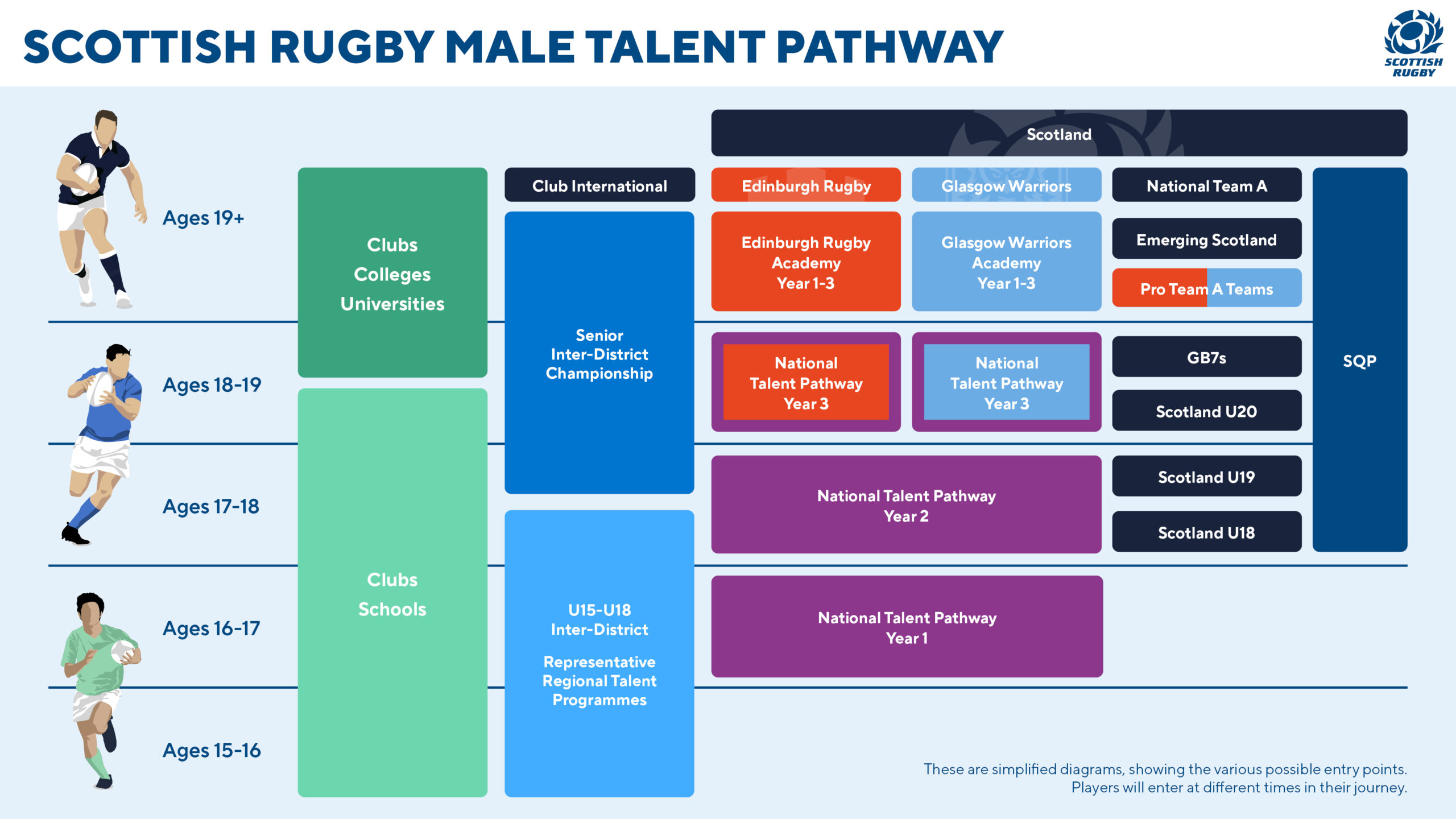
- More alignment with the pro teams through the creation of a three year academy programme which will be overseen centrally to ensure the player pathway benefits Scottish Rugby as a whole.
- A new National Talent Pathway from ages 17-19 involving a streamlined pool of our most talented young players aligned with Glasgow Warriors and Edinburgh Rugby with bespoke support tailored to their individual development plans.
- An enhanced Inter-District and Regional Talent Pathway programme to support identified club and school players, who have the future potential to play professional rugby.
- An increased focus on working with, and supporting, clubs and schools to enhance their player development programmes including physical conditioning and skill development.
- Specific investment in key areas such as nutrition to ensure our young players are supported with everything they need to succeed.
- Coach Development within the performance department will be given greater focus.
- Greater alignment across the high-performance department to improve both operational and financial efficiencies.
- The new approach allows for players to join, or leave, throughout the six-year window of pathway development. Players can join the programme at any stage subject to talent identification criteria being met, with the most talented being fast-tracked as deemed appropriate.
Why does the high-performance operating model need to change?
- The need to expedite the speed and increase the quality at which we develop high potential players to create a higher level of genuine competition for professional opportunities.
- To increase both our specialised resources and our focus on developing fully prepared players for the rigours of international rugby.
- To shift the performance pathway from a ‘Teams’ focussed model to a ’Player’ focussed model, that is Team supported. The alignment between the performance pathway and the professional teams will become fully integrated and aligned.
- An improvement in Talent Identification to ensure we feed the performance pathway with clearly identified high potential players. To achieve this the alignment between the high-performance department and rugby development will increase.
- To avoid silo working and create greater efficiency the structural changes will ensure greater alignment within, and between, departments.
- To drive greater accountability at leadership level to ensure results are driven at the required rate.
- To drive a greater level of professional development within and across departments.
The below graphic illustrates how the pathway is structured along with where players within the system will play matches including Scotland A, Emerging Scotland, GB 7s and age grade squads. The Scottish Qualified programme will run in conjunction with the system to identify and introduce eligible players who play outwith Scotland.
Following the Women’s Rugby World Cup, work on the female pathway will begin along with the recruitment of a dedicated leader for women’s performance and pathways to drive current performance and align the game, improving pathways and player development for female players.